Tuesday, February 4, 2014

Blow Out Criterion Blu - Double Team Review by Uncoolcat Chris and Master of the Blu Movie, Kelly Baird!


Though I was born in 1971, I cannot even fathom what it would be like to be coming of age in the seventies. The sixties are flat out insane. So many prominent figures, people who are easy to put upon pedestals, sincerely coming from a place of idealism and hope, literally shot down at their peak. Martin Luther King, John F. Kennedy (the fucking president!), Robert Kennedy, Malcolm X, even with John Lennon many years later, you would almost be nuts to to think there wasn't a conspiracy. Seriously, and this is worth repeating, it was fucking insane. However, that feeling of hopelessness and defeat fed into some of the best American movies ever made. The good guys didn't always win, redemption wasn't a guarantee and status quo was a nightmare. How's that for a silver lining?


 So, in 1981, four years before Rambo came along to make America feel like Numero Uno again, Brian DePalma crafted a masterful conspiracy thriller/character study. Blow Out, much like Michaelangelo Antonioni's Blow Up begins with a man accidentally recording what might or might not be a murder. In Blow Out's case, this man is Sound Recordist, Jack Terry, portrayed by John Travolta in easily one of his best roles. Jack is working on a low budget horror film (which DePalma opens with, leading to a great punchline. DePalma later revisits this type of opening to great effect in his Body Double) and the director demands he stop relying on the library stock sounds and go record some new effects. While recording in an isolated area, Terry manages to record what seems to be a car driving on a deserted road and having a blow out, leading to it plummet off a bridge. The driver, who happens to be the governor and presidential hopeful, dies on impact,  but Jack does manage to rescue a young female, Sally (Karen Allen) from the wreck, in a fabulously shot underwater sequence. Terry, being a sound recordist, and having an ear for sound believes that he heard a gunshot, but it seems everyone, from the police to politicians want this to be an open and shut case. And that's where Jack's problems begin.

Blow Out follows on the heels of some great conspiracy thrillers from the seventies; The Parallax View, All the President's Men, Three Days of the Condor; just to name a few. What DePalma does to separate himself from the pack, is to mainly focus on a single character, a man who has no political leanings, a shady past and a not so bright future. He is just a guy who works on smutty films, living day to day with not a care in the world. However, when the audience finds out what put Jack Terry in this position, it explains everything we need to know about why it is so important to him to find out the truth behind the politician's "accident". And makes the outcome all the more tragic. Besides being a very intriguing conspiracy thriller, this is a heartbreaking look at a man who gives himself one more chance to be the man he wants to be, with unpredictable results. The last shot of this film will stick with you long after the credits roll.

Even the assassination conspiracy seems to have taken a life of it's own, thanks to a rogue assassin. John Lithgow plays the heartless killer, Burke, who casually commits serial sex crimes to cover his tracks and goes above and beyond the call of duty when hired to smear a politician's name. Lithgow is incredible, playing Burke as someone who is all business, but if he was not in this line of work, would definitely be a serial killer or a telemarketer. Evil!   


One of the more interesting, and perhaps nihilistic things about the film is the use of technology, particularly, film. It definitely is no mistake that Jack Terry is a sound recordist for "the movies". I think with technology, other than being something for Jack to hide behind and focus on (though he has already been betrayed by it once), DePalma is also making a comment on film, or art in general, being a tool for change. Jack's original quest is to find a scream for a horror queen in an exploitation film, and soon he uses those same tools to uncover an assassination. Is it fitting that DePalma comes from what some might consider an exploitation background and is using his tools in Blow Out to create change? I think so. However, I do not think DePalma has lofty hopes of art changing Jack Shit, and in those final moments, what the technology is ultimately used for would make Gaspar Noe think, "Jesus!". This is also what makes Blow Out, coming late in the cycle of conspiracy films, seem so much more cynical. DePalma has seen nothing change despite the great works that has come before him. Maybe it's best to stick with the heavy breathing, deformed coed slashers.

Blow Out is possibly DePalma's greatest achievement. His "in your face" style never takes away from the story, only adds to it. Right off the bat, with his split screen showing a news program contrasting Jack labelling his sound library after cuing it up on his reel to reel, we see fact and fiction already at war. Even DePalma makes the room have a natural split, so when Jack crosses it in real life, we forget that it isn't a split screen. Fact and fiction are coming together. With terrible results. All of DePalma's tricks, from complicated camera moves to slow motion, enhance the drama or Jack's turmoil. Add to that, Vilmos Zsigmond's beautiful cinematography and there is really no reason not to be watching his right now.

MAKE OR BREAK: The ending. This would still be a great movie without that particular ending, but with it, Blow Out is a masterpiece.

MVT: DePalma. Seldom has he ever reached the heights of this film.

SCORE: 9.5

On a side note, I watched the Critereon Blue four thys philm......oo no, mi brian has stoped worcking. Hoos going too safe this revu...HELP!


Okay, well, obviously from the awesome review above we know this is an amazing film, but how is the Blu you may be asking ? Let's see what scrumptious treats Criterion has provided for us.


Video Quality

Blow Out is presented in 2.40:1 aspect ratio and looks better than ever. De Palma films usually look good anyway, but Blow Out has 2 very big things going for it. Vilmos Zsigmond and Garret Brown. Now, we all know good 'ol Vilmos, but Garret Brown may be a name you're unfamiliar with, and with this Blu looking as good as it does, he needs to be mentioned. Garret Brown is the inventor of the Steadicam operating system, a system to which this film and thousands more owe TONS to. Thanks to Brown and Zsigmond's beautiful photography this film pops like never before. From the little details of Travolta's sound equipment to Nancy Allen's smeared eyeliner. From the rain soaked streets to the grand finale, this transfer is stunning. There is a perfect layer of early 80's grain that puts you right there in '81. Very sparsely throughout the film there are few soft shots, but this seems to be due the original elements, which it appears Criterion has dealt with to the best of their ability.


Special Features

De Palma's early experimental film, Murder a la Mod:
Yup, that's right, you get another full length De Palma film as a special feature. A bit of suspense, a dash of sex and some nice camera work. Yeah, this is early De Palma, and it's guuud. HD/81 minutes

On-Set photos from Photographer Louis Goldman:
This is a set of a TON of great on-set photos. Some are funny, others as beautiful as the actual film itself. Definitely a cool little behind the scenes nugget for the fans.

Interview with Nancy Allen:
Conducted in 2011, this is fun little interview where Nancy Allen talks about meeting Travolta for the first time, working on the film, rehearsals, etc. HD/26 minutes

Interview with Steadicam operator Garret Brown:
Fascinating interview on not only the steadicam shots used in the film, but also the actual steadicam and how it works. Great for us cinephiles that need to know everything about a flick!! HD/16 minutes

Interview with Brian de Palma conducted by Noah Baumbach:
An almost hour long 2010 interview with the man himself, Brian De Palma. This is packed with info on not only Blow Out but stuff De Palma did before and after. This, for me, is the highlight of the special features. Dense with info, definitely check this out. HD/58 minutes

Theatrical Trailer


Packaging

It's kinda obvious this is going to be presented well as it's from Criterion. 99% of the time they hit home runs, as far as presentation goes. The cover features Travolta at his most exhausted point in the film, mid chaos. Tapes and reels are strewn all around him as he try's to figure out this complex mystery. As per most Criterion releases, there is also a very well put together booklet featuring an essay by critic Michael Sragow and Pauline Kael's original New Yorker review.


Final Word

Criterion has brought us what many would argue to be De Palma's best film in an amazing package featuring stunning picture quality, staggering special features all in a beautiful little package. This is a HIGH recommend. Get you're grubby little hands on it now! 5/5

Friday, January 31, 2014

War of the Arrows (2011) - Review by "Uncool Cat" Chris Brown

War of the Arrows, easily one of the best action film of recent years, unfortunately seems to be a victim of the North American blanket marketing style of Asian film. If it's an Asian period piece, make it look garish and epic, so it fits right in with the other glut of interchangeable DVD covers in the action section.  This movie ain't what's on the tin folks.

The back of the Blu Ray case says in bold letters "A Lavish Epic" -Los Angeles Times, and the first paragraph begins, "Two Dynasties at War. Two Men On A Mission." This brings to mind films like Curse of the Golden Flower or Red Cliff, with many characters, armies and political agendas. Even the overwhelming picture on the back of the case is of a horde of Manchurians on horses charging towards the camera. Granted, War of the Arrows begins this way, almost fooling the audience with a wedding between the daughter of a traitor and the son of a Military General, very beautiful and regal.  But then something happens. Something really bad. It's almost like the film wipes out the concept of a grand epic in one fell swoop and quickly becomes a gritty and brutal survival/revenge story which mostly has people running in a forest for their lives. And holy fucking shit, is it kick ass. - Chris Brown

Dog lovers be warned though, the first 10 minutes of the film could be called "Dog Death Aplenty", when the young daughter and son of a military general who is deemed a traitor by the corrupt king are forced to escape as their father is executed. Lots of savage dogs are dispatched for them to get away unharmed. However, this is an intense scene with children in peril, so I'd be surprised if many people will be rooting for the dogs. And if your cat happens to be watching, they will really get a kick out of this section.

Years later, both children grow up to live in hiding at a village led by their father's friend. The son, Nam-yi (the amazing Hae-il Park), has taken to living in the woods with two friends, hunting and drinking his time away. The daughter, Ja-in (Chae-won Moon), lives happily in the village and has even accepted a marriage proposal from the father's friend's son, Seo-gun (Mu-Yeol Kim). Nam-yi is portrayed as an uncivilized  drunk blow-hard, almost comically, near the beginning, fighting and puking his way through life. However, there is a fantastic scene when he is being dressed down and the audience remembers that this is a man who saw his father executed unfairly as a young man and has chosen his way of life, not because of lack of ambition, but because of his disgust at the system. In one scene the director, Han-min Kim, gets us completely on his side.

And right as the movie has you thinking, "What kind of conflict is going to arise with this wedding?", shit gets real(ly violent!) when an army of Manchurians viciously, and I mean VICIOUSLY, attack the village during the wedding. Nam-yi is off hunting, and the reveal of the Manchurians' attack, with the slight tremor of an arrow, is very effective. Then, as Nam-yi rushes to the village to honour the oath he gave to his father about always protecting his sister, he runs into the main "baddies" in the Manchurian group. There is the slimy Prince Doreugon (Gi-woong Park), but more importantly, his main henchman Jyushinta, an honourable but ferocious warrior played incredibly by Ryu Seung-Ryong. This is a bad guy for the ages. The rest of the film is closer in tone to Rambo than Hero. 

What the film does outstandingly well, other than the action set pieces, is to give every character their moment, so even the villains are human. What is really impressive is that in certain parts of the film, particularly with the forest chases, the Manchurians become the underdogs, and though the audience can certainly feel sympathy for them, they are still firmly rooting for the heroes. Every character feels alive and fresh.

And lastly, there is no way a review can avoid mentioning the action. Some of it brings to mind First Blood, like the incredible chase on the rock cliff (and even the bad guy who is just doing his job) and others might remind the viewer of iconic "hero" moments that can be found in films like 13 Assassins or The Wild Bunch. If you don't rise a little out of your seat at the final showdown your pants are probably covered in an adhesive substance. What the hell were you doing!?

War of the Arrows is an action masterpiece, a film that never lets up and keeps the characters relatable, yet still surprising. And boy can it be brutal at points. Just remember, "You don't calculate the wind, you overcome it.". Kick. Ass. 

Make or Break: The wedding scene massacre intercut with Nam-yi's escape. Brings the film to a whole new level that never lets up.

MVT: So hard to decide. I'll say the director, Han-min Kim. I'd seen his previous, Paradise Murdered, which was a hell of a lot of fun, but the way he kept this story moving while giving each character his due in War of the Arrows is quite an achievement. Now I need to see his film Handphone, I heard it's great too.

Score: 9.25. Yeah, it's that damned good.


Episode #272: Slinging Betty Blue

Welcome to another episode of the GGtMC!!!

THis week we bring you our diabolikdvd.com sponsored episode and it was Large William's turn to program the show!!! Films ccovered this week include Betty Blue (1986) directed by Jean-Jacques Beineix and Slinger (1989) which is the directors cut of Cyborg the Jean Claude Van Damme vehicle directed by Albert Pyun!!!

Direct download: ggtmc_272.mp3

Emails to midnitecinema@gmail.com

Voicemails to 206-666-5207

Adios!!!


Wednesday, January 29, 2014

Dr. Strange (1978)


This review is more than likely going to veer a lot into the realm of comic book nerdery, so you have my apologies at the outset.  

The honorific “Doctor” makes just about any word coming after it sound more important or alternately menacing.  Would Doctor Who be as cool if he were just Who?  Would Dr. Diane Shmelman be held in as high regard if she were just Miss Shmelman?  Would Doctor Death be less of a threat if he were just Death?  Well, yeah, maybe on that one.  Anyone’s name is augmented with honorifics; that’s kind of the point.  In an odd sort of way they bestow a mantle of adulthood on the bearer by the speaker, or at least they do when used in a forthright manner (though admittedly, this only really effective on kids and young adults).  But perhaps what they do best (at least in terms of showmanship) is confer the tone by which the holder’s character is meant to be gauged.  Witness: Mr. Majestyk, Ms. 45, Professor X, Captain Kangaroo, etcetera, etcetera.  Almost every honorific in recorded history has its share of badasses and morts attached to it, but to my mind, none are quite as potent as “Doctor.”  Funny thing is, unlike so many fictive characters who share the title, Dr. Strange actually is a medical practitioner.

The Ancient One (a stop motion creation voiced by the late, great Michael Ansara, and more than likely intended to be the dread Dormammu) informs elderly (yet still smoking hot) underling Morgan LeFay (Jessica Walters) that she has only three days to pierce the barrier between the dark realm and our dimension and vanquish the elderly and current Sorcerer Supreme, Thomas Lindmer (John Mills).  Employing the unwitting assistance of lovely, soon-to-be Buck Rogers Babe, Clea (Anne-Marie Martin aka Eddie Benton), Morgan very leisurely sets about her task.  Enter Dr. Stephen Strange (Peter Hooten), a warm-hearted physician and a cold-blooded lover, who just so happens to be connected to all of this much more personally than he would expect (but hardly the audience).

Outside of cartoons, I believe Marvel Comics characters came to the live-action world of television adventures a bit later than their main rival DC Comics.  There was the Shazam television series starting in 1974, the Cathy Lee Crosby version of Wonder Woman who appeared in a TV movie that same year.  Prior to this there were, of course, series starring both Batman and Superman.  However, to the best of my knowledge, the first Marvel character to hit the live-action world was their own wall-crawling web slinger in 1977’s Amazing Spider-Man program (episodes of which were condensed and edited together into feature length form a few years down the road).  Funny enough, the character with the best track record on television (two original pilot films, a show running five seasons, plus several more television features afterward), The Incredible Hulk, is also the one with the least cinematic success (hopefully this will change in the near future, as he’s my personal favorite).  Following this Dr. Strange outing, Captain America would even get a couple of films in which action star Reb Brown was allowed to strut his proverbial stuff.  

But this time period was really a heyday (at least in my mind) for the popularity of comic book superheroes (a time which is seemingly repeating itself currently, though now it could be argued they are much more self-serious).  They had seeped into the popular culture and saturated the market with everything from stickers to posters to records to toys to costumes and on and on and on.  But if you look at the above-mentioned characters, they predominantly all had a presence in the pop culture psyche before they hit the screen (big or small).  Hell, most of DC’s characters referred to here were created before or around the onset of World War Two (and yes, I know Shazam aka Captain Marvel was not even created at DC, but that’s another discussion).  Hulk and Spidey were extremely popular in their respective comic titles, and both had also had animated runs to further cement their statures.  By this logic, Dr. Strange seems a…um…strange choice to elect for Hollywood treatment, but if you look at the culture of the time, it actually comes a bit sharper into focus.  There was a fascination with all things occult and supernatural at this time.  In all sorts of media, if there weren’t ghosts haunting your house, Bigfoot raiding your fridge, or devil worshippers living next door to you, there was something wrong with you.  Obviously, Dr. Strange, at least from a perfunctory perspective should have fit right in and even dominated this time, but he didn’t.  

This film is part of the reason why he didn’t (or at least explains it a bit).  Hampered as I’m sure they were by a tiny budget and a short schedule, what writer director Philip DeGuere turned out is perfectly passable for a Wednesday night television programmer.  And that’s the real problem.  The story has any number of interesting avenues it can explore, but it does nothing with any of them.  The story of passing the mantle to the new Sorcerer Supreme is handled offhandedly.  Morgan’s ability to manipulate people and its ties to sexual gratification is teased but never explored (and yes, it could have been done so in a way that would have passed the censors).  The action scenes have absolutely zero tension in them, and every obstacle is conquered with the facility of walking up a ramp rather than with the senses-shattering effort of climbing a giant mountain.  

But even discounting these things, and bearing in mind that origin stories are a chore to do in any sort of fresh way even in 1978, the filmmakers (as the powers behind just about every live-action superhero venture of the time) seem to completely miss the point of what makes this character and characters like him compelling.  It’s not that Spider-Man can climb walls and shoot webs.  It’s that he is forever trying to work off the unbearable guilt he feels over the death of his Uncle Ben (“With great power comes great responsibility”).  It’s not that the Hulk can throw men hundreds of feet or crack the ground with one stomp of his foot.  It’s that he is the embodiment of a suppressed rage and impotence and the inability of Dr. Banner to deal with these issues in a healthy manner.  Dr. Strange was an ego-maniacal neurosurgeon who was maimed in a car accident and came to know humility and enlightenment as well as discovering a new purpose in life through the mystic arts.  The interesting parts of these characters are not their super powers but their feet of clay.  It’s sharing in their human struggles, of identifying with their tribulations that makes them special.  The costumes, the powers, the property damage is spectacle, and though it has its place, it’s simply not enough to compel the long term devotion these characters have garnered.  By making Strange a really nice guy with an overactive libido, he is (mostly) normalized.  His ego is no longer a problem.  He doesn’t have to suffer the loss of his hands and his medical career.  All he has to do is smirk, spout a few “magic” words, and he’s suddenly Gandalf.  I can only assume that this sort of thing is done to appeal to as many children and age brackets as humanly possible, but the trick is it doesn’t work.  Banality does not engender commitment to a character.  I could go on, but I already have so I’ll stop there.      

 As a time-waster, as filler, this movie is acceptable.  As anything that distinguishes itself from the pack or is in any way memorable other than giving us a couple of nice shots of Ms. Walter’s bare legs, not so much.  And yet, I’m glad that this was made, just because it gave a very brief spotlight to one of the more obscure superheroes from Marvel’s stable.  

MVT:  I love the core ideas behind Dr. Strange as well as the stop motion monster effects.  The execution is lacking, but what’s beneath is rich for exploration.

Make Or Break:  Following from that, I liked the scenes featuring the Ancient One and LeFay.  They’re a triple threat.  They have a stop motion monster.  They have a beautiful woman in tight clothes.  They have Ansara’s grandiose voice acting.  If only the rest lived up to this.

Score:  6/10

Saturday, January 25, 2014

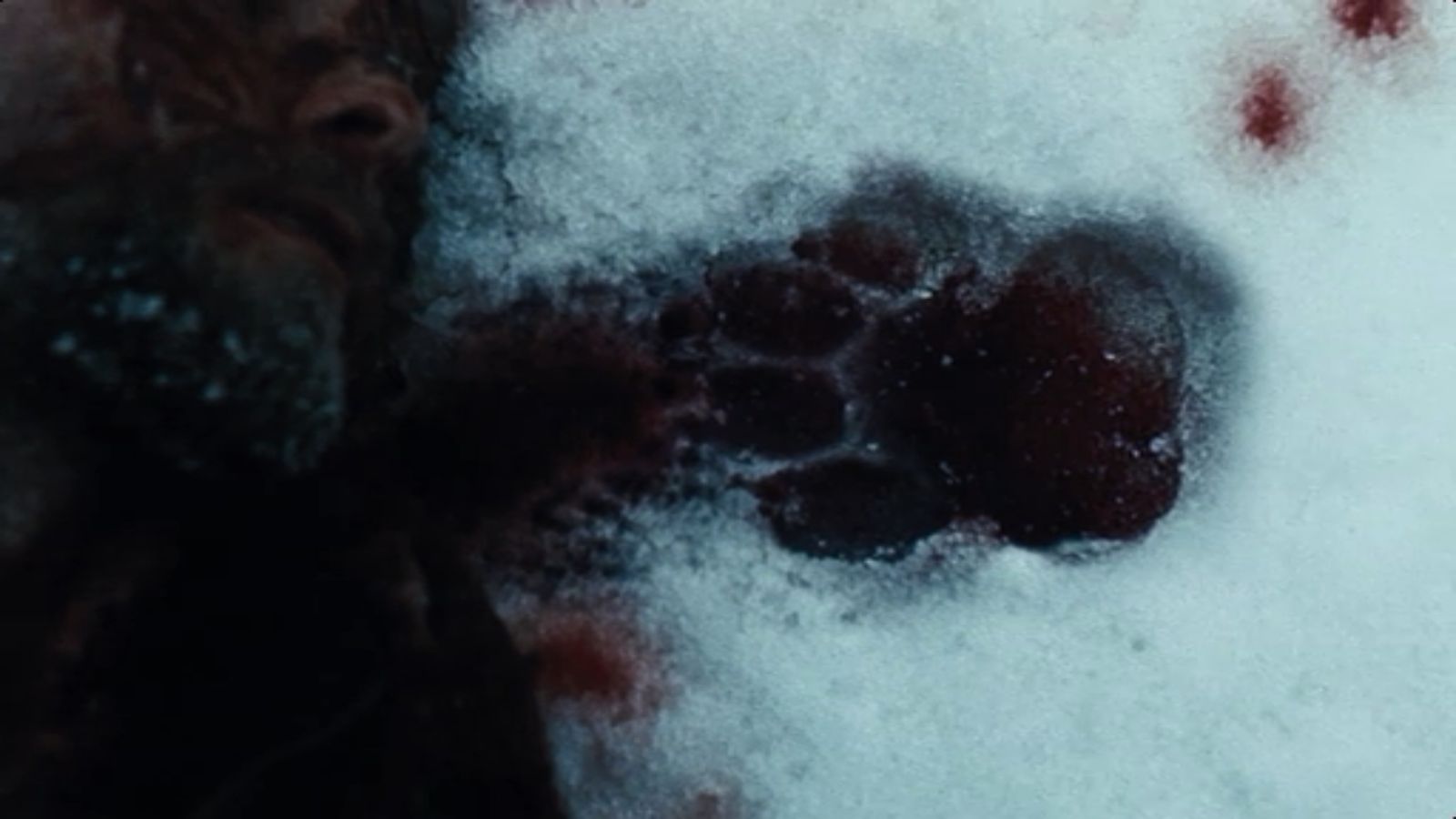
Instant Action: The Grey (2011)


Wolves are pretty awesome, even in this movie, they're still pretty awesome!

Screenplay By: Joe Carnahan & Ian Mackenzie Jeffers
Directed By: Joe Carnahan

Is The Grey an action film? That's the question I found myself asking, until I realized I shouldn't be asking that question. Of course The Grey is an action film, action is peppered throughout the film. The reason I initially felt like disallowing The Grey as an action film solely resides in the dramatic content of the film. The Grey isn't an action film first, it's a drama first. The action in The Grey exists to support the soul searching of Ottway, and his intrepid companions. The wolves are a source of internal horror made external, and while they do provide the action that's the not their true purpose. Yes, The Grey is an action film, but it has other aims and it doesn't shy away from putting the focus on its non-action aspects.

There isn't a plot comes to a conclusion sort of ending to The Grey. For some this will be disconcerting, a point of consternation even. For me, such an ending is refreshing and the ambiguity of the film left a delightfully tingly feeling in my brain. I like when movies challenge, when they ask me to look beyond the obvious and peer underneath the surface. Near the middle of The Grey I began to form theories about what the actual film was saying and why it was saying it. In the end a theory put forth by my wife is what swayed me the most. I followed this theory to its natural conclusion and that's when the film, and its ending really came alive in my mind.

The action, or horror depending on how you look at it, gives life to the demons plaguing Ottway. The story isn't about a group of men trying to survive, rather it's about one man attempting to come to grips with his inner demons. The wolves are an external threat, but they are representative of his internal fears and regrets. The characters we spend time with represent the various ways that Ottway has dealt with adversity throughout the years. The Grey ends up being a film of stages, or rather a film about stages. Essentially we are following the various stages of Ottway's life and his dealings with grief. Of course, that's not to say that what we are seeing isn't happening, it's up to the viewer to decide what reality is, what a demon is, what is struggle, and what the point ultimately is in The Grey.

A key scene for me in the film comes early on, when one of the surviving characters is dying. Ottway, Liam Neeson, tells this man that he is going to die. Joe Carnahan avoids theatrics, and keeps things small and intimate. We see the shocked faces of the other characters, and we get a shot of Ottway gently placing his hand on the dying man. Ottway talks the man through his final moments, and what is left is the raw vulnerability of humanity. The rest of the film is fundamentally about dealing with this scene. The ramifications of facing your own mortality up close and trying to overcome the domestic and foreign ills that haunt us.

I'm not super familiar with the work of Mr. Carnahan. In fact, The Grey is the first and only film I've seen from Mr. Carnahan. I'm not sure if the rest of his work is as deeply poetic and tender as The Grey. It doesn't really need to be though, because The Grey exists and is fully comfortable in the tender clothes Mr. Carnahan shrouds it in. The Grey is an action film, with sequences that are thrilling, suspenseful, violent, and well-choreographed. It's also a drama, a tender tale of the fragility of life and the efforts humanity will go to in avoiding owning up to their own fragile mortality. The Grey is a well-made film, an action movie with a soul, and a deep rumination on the nature of the human spirit.

Rating:

9/10

Cheers,
Bill Thompson

Friday, January 24, 2014

Episode #271: Cohen and Tate Express

Welcome to another glorious episode of the GGtMC!!!

This week the Gents are joined by SleepyCris, a great friend and supporter of the show, for her Kickstarter selections. Cris chose The Sugarland Express (1974) directed by Steven Spielberg and Cohen and Tate (1988) directed by Eric Red!!! We want to thank Cris for the support, the selections and the conversation!!!

Direct download: ggtmc_271.mp3 
 
Emails to midnitecinema@gmail.com

Voicemails to 206-666-5207

Adios!!!


Wednesday, January 22, 2014

Death Occurred Last Night (1970)


Amanzio Berzaghi  (Raf Vallone) pleads with top cop Duca Lamberti (Frank Wolff) and Duca’s smartass subordinate Mascharanti (Gabriele Tinti) to find Amanzio’s missing daughter Donatella (Gill Bray/Gillian Bray).  Even though she’s twenty-five and well over the threshold of adulthood, she’s also mentally challenged and has the maturity level of a three-year-old.  Plus, Donatella’s a full-blown flirt who “loves doing anything men ask of her,” forcing her father to keep his apartment locked down like a fortress.  Now it’s a race to see who will find the culprits first and what will happen to them afterward.

Duccio Tessari’s Death Occurred Last Night (aka La Morte Risale A Ieri Sera) is a Eurocrime/Poliziotteschi film, but it hews slightly closer to an American Police Procedural in its general approach to the narrative.  The film isn’t action-packed like, say, The Big Racket or Live Like A Cop, Die Like A Man.  It is very much a slow burn with a slow build, focusing on the banality of the day-to-day tasks of investigating a crime in Milan.  It is interesting, then, for how unexploitive the majority of the film is in terms of violence, how very exploitive it is in terms of sex.  The hookers shown all do their damnedest to put it all out there, and they drop their clothing like they would a used tissue.  There also seems to be a very conscious decision on the part of Tessari in the casting and depiction of Donatella.  Without being too indelicate or insensitive, she is closer in the looks department to a model than to someone most people would identify as mentally challenged.  She dresses in apparel designed to show off her womanly assets, and there is even a lingering shot of her trying to figure out how to put on her bra, which focuses almost exclusively on her breasts.  Further, as Amanzio describes the life he had with his daughter, the film gives off a very distinct whiff of incest.  This, thankfully, is never explored, and their relationship is nothing more than one of familial love, giving more power to this father’s anguish.

That said, I think the juxtaposition of the hookers with Donatella and their treatment by the filmmakers is relevant to one of the film’s themes, and it is one of objectification of women.  These women are essentially pieces of meat to be traded for money; their bodies their only value.  Were Donatella of sound mind, she may have been able to escape her captors or think her way out of her situation.  Because she can’t, she can only cry out for her father’s help.  Errera, the black hooker (essentially a double strike against her from her experience with Milanese society) whom Duca takes into his flat, understands her situation all too well, although she tries to play it as if she were in control of her life (“There’s no pimp behind me; I’m free”).  Nevertheless, later the truth will come out (“I’m still on the streets with a different pimp”), and it is this acknowledgement of her station that causes Herrera to go down a self-destructive path.  Additionally, it is another character’s desire to be wanted physically which plays a large part in the film’s resolution.  Yet this desire clearly rises from a place of loneliness and possibly from the consideration that it is physicality which defines beauty and worth.  This mindset would almost certainly emanate from the behavior of men in regards to hookers and the bodies of women like Donatella, who do not appear to have anything else to offer a person outside of their anatomy.

Beyond this is a debate on morality and the value of human life, and this is, intriguingly, played out not in the police activity with local pimp Salvatore (Gigi Rizzi) or the dealings with Amanzio, but in the scenes of Duca and his wife/girlfriend (Eva Renzi, whom I’ll refer to as his “lady,” since I couldn’t find a name given to the character either in the film’s subtitles or on IMDB) at home.  Duca is of the opinion that people are predominantly scum, and they are exploited by other people, who are equally scum-esque.  This first comes up when he visits his lady at her newspaper job and comments on the violent photos they use.  When she states that people are violent and they are merely reporting such, Duca retorts that he wants it to end, that in some way, by keeping these types of things in the public eye, they continue to be propagated.  Despite this cynical, world-weary view of life, Duca tries desperately to cling to a sliver of hope.  He plays guitar and sings while at home.  He is a giving romantic with his lady.  This also explains why he takes Errera into his home.  Ostensibly, it’s so she won’t be harmed by anyone or harm herself before he can find Donatella.  Yet, as the film plays out, his and his lady’s conversations with her tend to revolve around her inability to recognize her value as a human being.  In spite of this, neither one can stop the hooker’s self-harming tendencies.  This presents us with the central question of the film, and to my mind, it’s not the obvious one of who has the correct perspective on life; Duca or Errera.  Rather, I like to think that it takes for granted a pessimistic attitude toward mankind and instead asks “why should we care?”  Clearly, we can only answer such questions for ourselves, but I think that Tessari’s confidence in his audience’s ability to parse out this conundrum is what ultimately makes this film as strong as it is.

Another way this film differs from other Eurocrime films, at least to my reckoning, is in the stylistic techniques Tessari employs.  The sequences where Amanzio recounts Donatella’s kidnapping and their life before that are strung together in fractured time.  The editing leaps back and forth, with very little to anchor the viewer as to when the events take place.  When we flashback to sequences of the Berzaghis’ happiness, it is accompanied by an oddly rowdy lounge-tinged song, further reinforcing the idea that even when times were good, they were still filled with disarray and a sense of anxiety.  In all of this, the full exposition of the story is given while simultaneously cultivating a stark sense of chaos, mirroring Amanzio’s mental state and desperation.  As Duca and Mascharanti search the city, many of the scenes which we would expect to be loaded with banter or with Procedural dialogue are edited with music rather than any diegetic sound.  What they say in the course of their routines is inconsequential.  In fact, the audience could likely recite it all for them with little effort, because their dialogue in these scenes is not the point of the film.  The kidnapping investigation is merely the context for the content of a deeper conversation Tessari wants his audience to contemplate.  It shades the film as something of an odd duck at first glance, but once the veneer of genre is stripped away, what remains is a philosophical quandary which may have a simple end but hardly by simple means.

MVT:  Wolff does a very nice job of playing a man at odds with his existence.  He cares, but he can’t really show it in public.  He is frustrated by the world he encounters, but he believes it can be changed.  All encapsulated by an actor with a truly shrewd and withering glare.

Make Or Break:  Without divulging anything, the ending of this film is outstanding.  It satisfies while also putting a period on the end of sentence which is still a question.  The more I think on this film, the more affected I become by it and its final frame.

Score:  7.25

Tuesday, January 21, 2014

Blu-Ray Review: Thief (1981)


Thief (1981)
Director: Michael Mann
Aspect Ratio: 1.85:1
Starring: James Caan, Tuesday Weld, James Belushi, Robert Prosky, Willie Nelson

Plot Synopsis: Career criminal Frank (Caan) wants to call it quits, but can only do so by performing one last heist. What he doesn't know is how hard that will be after getting involved with the wrong people.

Criterion brings us Thief in a Blu/DVD combo package that showcases this gorgeous film like no other release of it ever has. Let's dig into this awesome package a bit to see what's in store.


Video Quality

I first saw this film on DVD, and that's the only way I've ever seen it, so when Criterion announced this for release I was more than excited because the DVD left a lot to be desired. Well, I'm happy to report this transfer looks fucking gorgeous! From the little details like close-up's of electronic equipment to the grand scale cityscapes of Chicago's skyscrapers, it is near flawless. There are a few soft establishing shots, but that appears to be due to the original elements and is no fault of the transfer itself. There is a light layer of grain over the whole film that is totally unobtrusive and gives Thief a nice filmic look and feel. This is a great transfer from top to bottom. 4.75/5


Special Features

Commentary:
This commentary has been ported over from the prior DVD release that features Mann and Caan in a fun and lively discussion of the film.

Michael Mann Interview:
A 2012 interview done by Criterion with the Director in which he reveals a few choice cuts of information that I've never heard before. HD/25 minutes.

James Caan Interview:
Another recent interview with the Thief himself. It's pretty great listening to Caan reminisce about stories from the film. He recalls a few stories in which he reveals maybe a bit too much information regarding thievery and how good he became at it. HD/10 minutes

Johannes Schmoelling of Tangerine Dream Interview:
A nice little interview recalling the development and creation of the unforgettable and mesmerizing score which pulsates throughout the film. HD/15 minutes

Packaging

Criterion has put together a nice little package here with the cover featuring  James Caan as the titular Thief looking off in the distance, perhaps contemplating the choices he's made in his life, which really sums up a lot of this film. The disc art is equally great, with that awesome handwritten font illuminating as bright as the welding sparks in the film. In addition to everything already mentioned, you also get a nice booklet featuring an essay by film critic Nick James and some gorgeous artwork and photography.

Final Word

Beautiful packaging, new special features, wonderful transfer of an amazing film. Pick this shit up now!! 5/5


Thursday, January 16, 2014

Cold Eyes (2013) - Review by "Uncool Cat" Chris Brown

Do Not Engage.

These three words perfectly encapsulate every major character in this very engaging film from South Korea.

In the pre-credit sequence we see two very similar (but couldn't be more different) situations played perfectly against one another. In one, Yoon-joo Ha AKA: Piglet (Hyo-ju Han) is tailing Kyung-gu Sol throughout the city, attempting to remain unseen. Immediately we can see that she is uncommonly bright and observant. In the other sequence, James (Woo-sung Jung) orchestrates a bank robbery from the top of a sky rise. The results of both endeavours, though shown to be successful, could also be seen as failures. Both in the fact that the people trying to remain in the shadows are forced to engage.
As the plot progresses, Piglet is hired to be in an elite squad of surveillance experts. The leader, Chief Hwang, organizes his team to find a suspect from the earlier robbery in the vast city of Seoul with only a general description. What follows is like a combination of the "tailing" segment of French Connection and the "surveillance" of The Conversation with more gloss and less Gene Hackman. Complications arise and Hwang needs to remind Piglet, that no matter what is happening, it is their job not to get involved, and only to observe.
On the other side, James is forced into doing more work, which he reluctantly agrees to. Though he is mostly a spectator/planner, much like the team hunting him down, he can kick some serious ass when needed. And he proves that the pen is mightier than the sword. And possibly an Uzi. Woo-sung Jung really shines as James, a mastermind criminal; reserved, observant, meticulous and incredibly dangerous. He is absolutely cold hearted, but you can still see the human being who wants out without getting caught.
Eventually things are bound to come to a head, and when they do the film really kicks it up a notch. Both sides are forced to come out of hiding and have to make life and death decisions. Some revel in it, some don't. It is akin to the fluffers on a porn set finally getting to participate in the gangbang! Kinda.
What works great in the film is the constant feeling of the team getting one step closer to James, as he tries to distance himself from his crimes. And when the action hits, there are some great set pieces. The lower billed team of criminals and surveillance experts both serve their purposes well, though they are merely background characters for the leads to work off of.

This is a very fun procedural that never tries to attain the heights of a Memories of Murder, but works very well as popcorn fare. And keep an eye out at the end for a cameo from a GGTMC favourite who has recently added Korean cinema to his CV.
 
MVT: James. Easily. A great villain who is as brutal as he is smart. The movie always felt like it kicked it up a notch whenever he was on screen.
Make or Break: When James finally realizes he has to take matters into his own hands. Shit really hits the fan on both sides and makes for fantastic viewing.
Score: 8

Episode #270: Top 30 First Time Watches

Welcome to what has become an annual tradition at the GGtMC!!!

Large William is joined by some friends for discussions on the top 30 films they saw for the first time in 2013!!!

Direct download: ggtmc_270.mp3 
 
Emails to midnitecinema@gmail.com

Voicemails to 206-666-5207

Adios!!!